

In just the first few weeks of 2024, the realities of charging infrastructure in some parts of the U.S. struck like a bolt of lightning; first with the winter nightmare in the midwest that left several Tesla owners stranded last week, and again in New York City where we found an overburdened charging infrastructure from a growing number of electric rideshare vehicles on the streets.
The charging problems were a confluence of several factors: lack of driver education, Arctic air wreaking havoc, and poor reliability. Experts at Flo and Revel told InsideEVs what might have gone wrong with the chargers in the Midwest from a technical standpoint, and why they thought summer months are potentially a bigger worry for the proper functioning of DC fast chargers.
Get Fully Charged
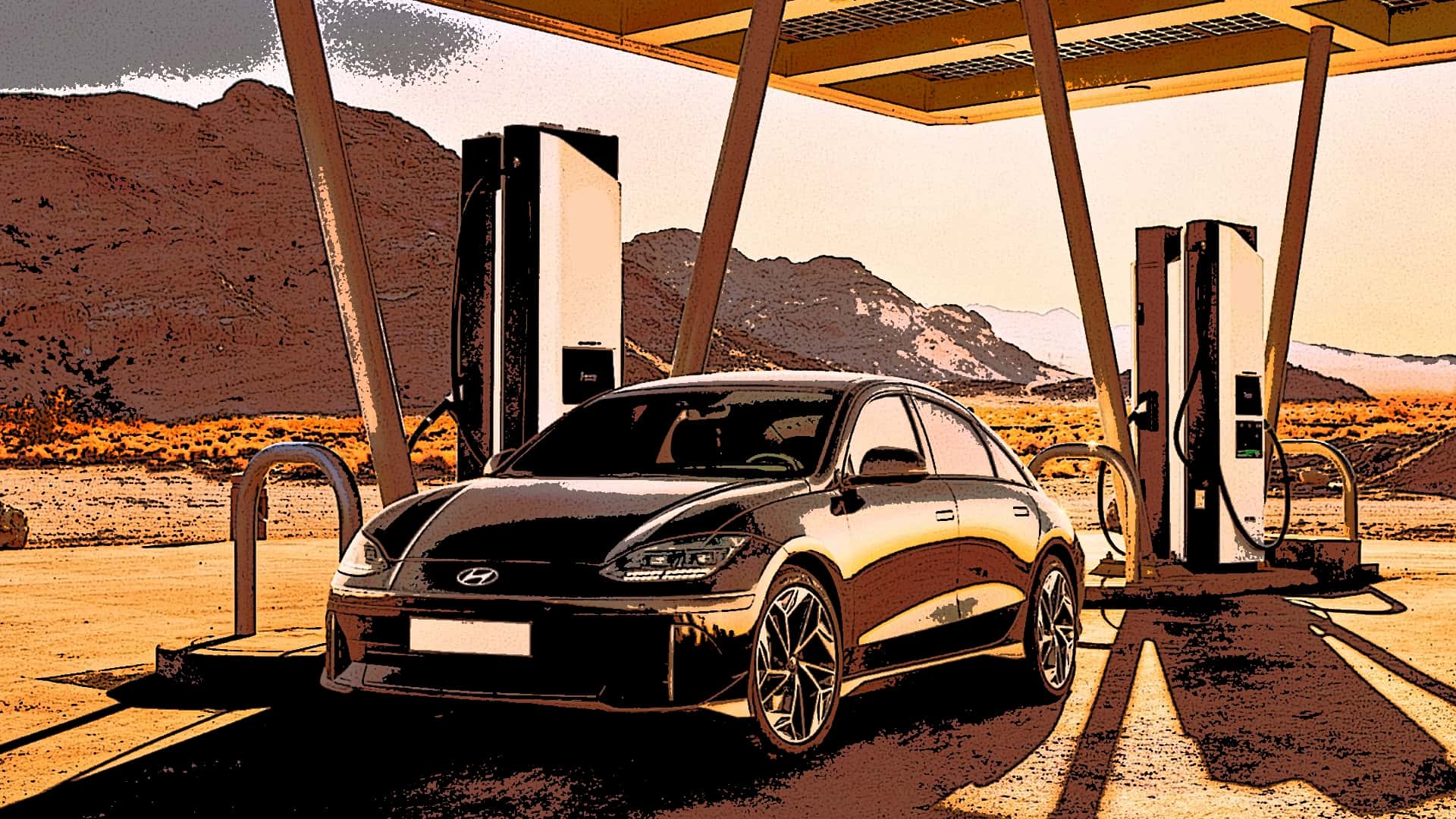
Extreme heat could be worse for DC fast chargers than extreme cold
Heat is the enemy of electrical systems if proper cooling systems are not in place. And the same goes for DC fast chargers that have extremely high amperage and voltage ratings. Thankfully, there are ways to regulate these extremely hot and cold temperatures.
The National Oceanic and Atmospheric Administration (NOAA) has declared that 2023 was the warmest year in record-keeping history that dates back to 1850. And 2024 is expected to be hotter still.
That means the charging infrastructure—among every other aspect of our lives—needs to prepare for what’s to come.

“Heat is definitely worse than the cold,” said Tobias Lescht, the head of infrastructure at Revel, the NYC-based ride-hail start-up. In addition to its neon-blue Tesla and Kia ride-hail vehicles, Revel has also been installing DC fast chargers in New York and other cities to serve its drivers and other EV owners. As a result, Revel’s becoming a kind of cross between Uber and Electrify America—which brings it the same kind of headaches any fast-charging provider will face.
High temperatures exacerbate the challenges of managing heat generated during the fast charging process. The charger’s components, especially power electronics, can generate excessive heat, which can then potentially lead to reduced charging speed, increased wear, and a higher operational risk.
Nathan Yang, the chief product officer at Flo, a network that operates fast and slower chargers across the U.S. and Canada, echoed this problem as he explained how crucial temperature regulation is to DC fast chargers for both, extremely cold and hot climates.
None of the Revel chargers in New York or the Flo chargers were known to have failed during the recent winter snap, but Lescht and Yang speculated what may have gone with other chargers based on their knowledge of how the units are built.
“We try to design our air intake and air exhaust in a way that’s not affected by cold weather and not affected by snow. Imagine if snow blocks air intake or exhaust, DC fast chargers will heat and so electronics will start failing,” Yang said.
Fast chargers are typically equipped with comprehensive cooling systems (air or liquid cooling). These systems manage and dissipate heat, but if there’s a heap of snow blocking the air ducts, they can’t do their job, especially the air-cooled dispensers.
“A Level 2 charger doesn’t have any moving parts in it. It passes the electricity from the wall into your car. A level three charger is a complicated machine. These things cost as much as a car, have moving parts to them, and have a lot of complex power electronics. And things go wrong from time to time,” Lescht said.
He speculated that the chargers that broke down across the midwest last week might have been liquid-cooled. Cables on the Tesla V2 Superchargers are air-cooled, but the newer V3 Superchargers are indeed liquid-cooled. Since the cables handle a high amount of amperage and heat, they need liquid cooling to help regulate the temperatures.
“The cables might have frozen up the liquid in there somehow. Usually, they use glycol [a heat transfer fluid], the same thing that you have in a radiator in your [gas] car,” Lescht said. “They need to ensure that the cooling fluid that they’re putting in is rated to the extreme temperatures, just like you put in a window washer fluid for winter versus summer.”
What happened in Chicago was not necessarily the problem with the chargers—it could be the problem with the fluid that’s going into the charger, Lescht added.
Flo incorporates 400 sensors in its DC fast chargers to measure temperature, strain, and pressure, for the glycol cooling system. “If something happens to the charger, we can backtrack in time to figure out sensor correlation and temporal correlation to see what caused that issue, and either prevent it or improve our firmware,” Yang said.
Another solution is to install oversized blowers to increase the capacity of airflow to improve cooling and also to smoothen the charging curve if push comes to shove. “We don’t want to leave a user stranded, so we would rather throttle the speed and still let them charge adequately,” he added.
The City of New York and power company Con Edison published a report last year, stating that Flo’s curbside Level 2 chargers had an uptime of over 99%. (However, usage rates were quite low at the time.) Flo’s DC fast chargers are claimed to have an uptime of more than 98%.
For Revel in December 2023, chargers had an average uptime of over 95% at its most utilized sites in Brooklyn—the flagship Superhub with 25 fast chargers in Bed-Stuy, and the South Williamsburg Superhub with 15 fast chargers, with the former being an outdoor public charging station.
However, NYC hasn’t seen truly extreme cold temperatures in years—although summers are certainly getting warmer—but these relatively new networks are still expanding their footprint. So there’s little doubt that the Tesla Supercharger network is incontrovertibly the most reliable and comprehensive charging network in the U.S., and that seems unlikely to change anytime soon.
That said, addressing these issues will require comprehensive solutions, with better driver education on features like battery preconditioning, installing chargers with better operating temperatures, and establishing a robust network to ensure that even if drivers run into out-of-order chargers, alternatives aren’t too far.
Contact the author: suvrat.kothari@insideevs.com
